
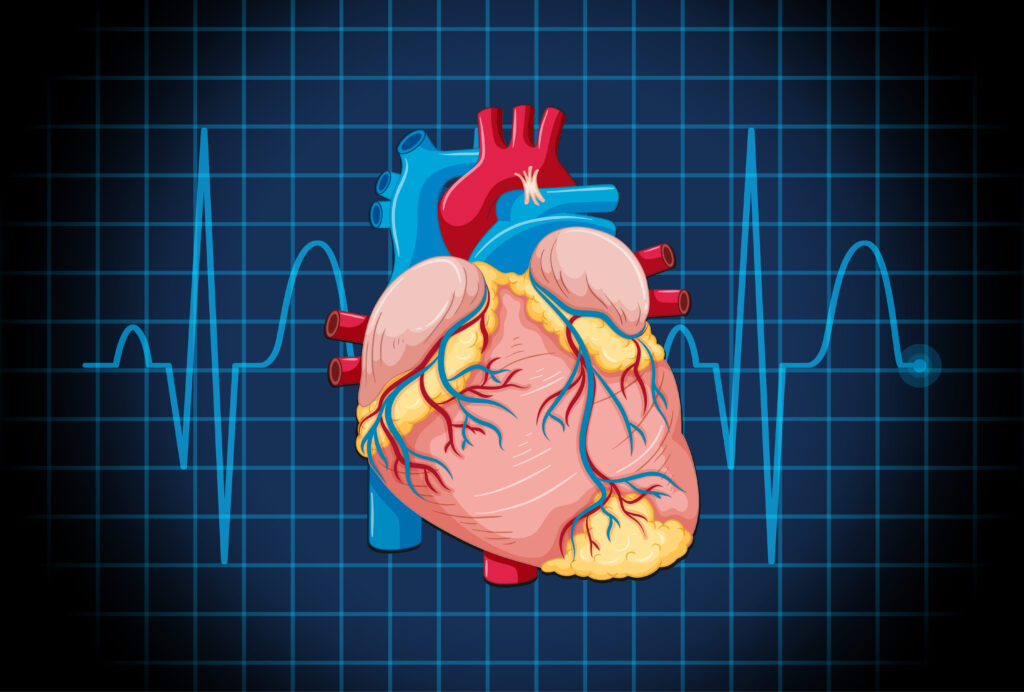
You are at the right place to study about The Evolving Science of Hypertensive and Atherosclerotic Cardiovascular Disease, Cardiovascular disease is an enormous health threat in the world not only due to its resulting death rates (millions every year), but also due to the complexity of prevention and treatment associated with different pathologies (atherosclerosis and hypertension) that interrelate. This paper will take a guided tour through the changing nature of atherosclerotic cardiovascular disease (ASCVD) and hypertensive cardiovascular disease (H-CVD) by the year 2025: their intersection, their division, what new discoveries have been informing us, and why that is important.
Preparation: the meaning of ASCVD and hypertensive cardiovascular disease.
We shall start with definitions (but the borders between them are gray).
ASCVD is a loose term that includes diseases that are due to the accumulation of atherosclerotic plaques in large or medium arteries: coronary artery disease (CAD), peripheral arterial disease (PAD), ischemic stroke (due to atherosclerosis of large arteries). This is caused through lipid deposition, inflammation, endothelial dysfunction, smooth muscle migration, fibrous cap formation- and ultimately plaque rupture/thrombosis in most cases.
Instead, hypertensive cardiovascular disease refers to the cardiovascular harm, which accrues due to chronic high blood pressure (BP). Among them is left ventricular hypertrophy, diastolic dysfunction, small-vessel disease, accelerated atherosclerosis, arterial stiffening, and the further risk of ischemic and hemorrhagic phenomena.
Notably, these two are closely interconnected: hypertension increases the rate of atherosclerosis (by facilitating endothelial damage, shear stress transformations, arterial remodeling) and atherosclerotic disease tends to augment blood-pressure maladaptations (by stiffening arteries, engaging kidneys, etc.). According to a recent review, it is stated expressly: Hypertension is the largest population attributable cardiovascular risk. Hypertension is a risk factor that speeds up the progression of atherosclerotic cardiovascular disease (ASCVD)….
Therefore, in order to know cardiovascular risk in 2025, we cannot take these as absolutely different but as two gears that are in the same machine over each other.

New insights & major trends in 2025
A bunch of new studies and reviews that promises to be published in 2025 provides some additional shades to our previous knowledge. I would also emphasize on such themes: inflammation and biomarkers, mechanistic/haemodynamic, epidemiology and burden, lipid management gaps, and hypertension-specific.
Inflammation, biomarkers & residual risk
A change that can be seen very clearly: inflammation is no longer a sideshow in ASCVD. One of the most significant scientific assertions of the American College of Cardiology (ACC) focuses on the fact that chronic low-grade inflammation (eg measured using hs-CRP) is actionable. PubMed Even with well-controlled LDL-cholesterol, a high hs-CRP is a predictor of recurrent events in patients.
Add to this, a 2025 review goes further and considers non-traditional lipid biomarkers (e.g., lipoprotein(a), small dense LDL, oxidised LDL) and concludes that they assist in explaining the residual risk – the risk that has been left behind by traditional lipid, BP and lifestyle-factors. Frontiers+1 The implication: we are leaving behind LDL alone is the driver of plaque and looking at more nuanced lipid/immune/inflammatory interactions.

Haemodynamic deep dives and mechanistic deep dives
One can say that hypertension harms arteries, but it is altogether another thing to be able to observe the way in which blood moves physically, and the reactions of plaques to it.
One of the intriguing investigations in the early 2025 examined the high-intensity helical flow in a coronary artery. The point: helical flow (spinning / twisting flow patterns, which some thought could be protective) is not always benign–although it can cause some regions of very low shear stress (which enhance plaque formation), it can also cause some regions of some of the worst shear stress that is associated with plaque vulnerability. arXiv
The other computational studies involved 3D ultrasound and computational fluid dynamics to demonstrate that downstream cardiovascular events were correlated with vorticity (i.e. swirling blood flow) and not the presence or magnitude of wall shear stress in carotid disease. arXiv These mechanistic observations should not be forgotten: plaque behaviour is important, not the presence or magnitude of wall shear stress. The haemodynamics of hypertensive vessels might not be the same as the normal vessels and this affects the risk.

Epidemiology & burden: persistently increasing
Although prevention has already been in progress, the weight of ASCVD, as well as high blood pressure, is overwhelming, particularly in low and middle-income countries (LMICs). Indicatively, a recent Chinese data (1990-2021) study revealed that in China, the population-attributable fraction of ASCVD is still highest to metabolic risks (eg diabetes, obesity, dyslipidaemia). Frontiers
A different projection 2025-2050 predicts a rise in worldwide mortality due to crude cardiovascular of 73.4 percent and a large fraction of it to high systolic BP. PubMed
And locally: one of the studies in the Middle Delta of Egypt identified uncontrolled diabetes, dyslipidaemia, and dietary intake of high-fat content to be some of the major risk factors of ASCVD in that low-income region. Global Heart
It all means that: even after advances, the drivers of the problem that exist upstream (hypertension, dyslipidaemia, obesity, lifestyle) have not been completely tamed.
Lipid control and gap diagnosis
Should we consider ASCVD management, one of the recurrent gaps that will be raised in 2025 is lipid management. In an observational study, UK, the prescription rate of high-intensity statins among ASCVD patients increased (to an average of about 25% after a period compared to about 9%), but the rates of patients with a known LDL-C outcome decreased (to about 44-47 percentage of incident and prevalent patients), and the proportion of patients who met the target LDL. MDNewsline
A Chinese cohort also found in hypertensive populations that in hypertensive patients with high ASCVD risk, extremely low LDL-C levels (less than 1.4mmol/L), paradoxically increased the risk of hemorrhagic stroke and all-cause mortality, compared to hypertensive patients in the intermediate range 1.80-2.59 mmol/L. clinicalhypertension.org.
Therefore: lipid management in patients with both hypertension + atherosclerosis requires a fine touch: it is not necessarily optimal to reduce, and monitoring/reporting is still not even.
Hypertension with atherosclerosis
Due to the overlap, reviews on hypertension specifically in atherosclerotic disease have been performed in 2025. The summary of the article Current Opinion in Cardiology is as follows: hypertension is not just a driving force of atherosclerosis, but in patients with established vascular disease, the task of BP regulation becomes more complicated (because of e.g., stenoses, multimorbidity, side-effects drugs) and the use of new procedures (such as renal denervation) is returning to the agenda. Lippincott Journals
In other words: when the plaque-filled arteries are combined with a high BP, it is not the treatment of the BP but the treatment of the BP in the bad arteries.
The implications on clinicians, patients and health systems
The translation of research into practice is not usually that easy, yet there are several implications that should be highlighted.
For clinicians
Risk evaluation should contain inflammation and non-conventional markers: LDL is central, but increased hs-CRP or lipoprotein(a) etc., can alter the nature of the intervention.
Management of hypertension is of particular concern to individuals with established atherosclerosis: It is not sufficient to reach 140 / 90 (or whatever level) – the goal can be different, and the risks downstream (eg stroke, hemorrhage, microvascular damage) have to be taken into account.
Conceptual significance of flow and artery health: The haemodynamic researches are reminding us that the susceptibility of plaque and the geometry of the arteries are important. Imaging and maybe functional measurements might more specifically become connected to risk stratification.
Do not undervalue lipids in hypertensive patients with ASCVD – but appreciate that ultra-low LDL can in certain situations increase the risk of hemorrhage; monitoring and personalized goals could be required.
On behalf of patients and population-health
Even lifestyle is more important: The continuous increase in burden is the reason why medications will not be enough. Obesity, inactivity, diet, smoking still prevail. Indicatively, one of the studies conducted in the Middle East reported that physical activity guidelines were only adhered to by a low proportion of young women (around 25 percent), which correlated with increased BMI and hypertension/diabetes. BioMed Central
Knowledge that there is some damage that is occurring without you recognizing it: You might have high BP, or you have borderline lipids- and you do not feel anything, but arteries and vessels are being affected.
Equity is paramount: The weight is put on LMICs and poor populations. Individualized intervention (culturally, economically) comes into the equation.
On behalf of health systems and policy.
Better screening and monitoring systems: Since there are gaps in documentation (eg LDL data, BP control), health systems need to strengthen the processes, particularly in the case of the patient with known ASCVD or hypertension.
Earlier intervention: As an example, in complication of pregnancy that is related to subsequent ASCVD risk. A review established long-term ASCVD to be highly linked to hypertensive disorders of pregnancy. SpringerLinkAdoption of innovation: AI tools identifying risk, then imaging tools to determine the presence of plaque, and finally interventional technologies (renal denervation, etc) the ecosystem is changing. However, these can increase disparities in case access is unequal.
Click here to study more about this study
Uniting it: a comprehensive perspective
Think of a middle-aged patient in 2025. They have 10-year hypertension, type 2 diabetes, borderline lipids and maybe there is a family history of heart disease. During the 2010 era, we could have done BP a favor and made him/her feel like he/she was under control, prescribed statin, told lifestyle advice. But the 2025 view asks deeper:
What is their residual inflammation (eg hs-CRP)?
Their plaque burden or flow pattern (in the case of advanced imaging available)?
What is the state of their arterial rigidity, renal activity, vascular bed well-being?
Is there a role of non-traditional lipids (Lp(a), small dense LDL)?
Whether they already have subclinical atherosclerosis or not?
In the management of BP do we pay attention to the condition of the arteries (eg stenosis, renal arteries) and the possible effects of overactive or underactive reducing?
Are we incorporating lifestyle, pharmacology, imaging, maybe interventional possibilities?
In other words: the previous siloed nature (hypertension OR atherosclerosis) is yielding to a synergistic model: hypertension causes atherosclerosis; atherosclerosis causes hypertension outcomes; they both represent underlying metabolic, inflammatory, and haemodynamic processes. The 2025-research is introducing new details (patterns of flows, AI risks modelling, non-conventional biomarkers, new interventions) to that model.
Difficulties and questions not answered
Even with the improvement made, there are still a lot of questions to be answered–some of them were brought up in the existing reviews:
What is the best BP goal in patients who have known ASCVD in various vascular beds (coronary, carotid, peripheral)? It may not be the case that the one size fits all. Lippincott Journals+1
What is the optimal LDL (and other lipid markers) level of hypertensive patients who have plaque and are at high risk of bleeding? The Chinese cohort observation of the high risk of hemorrhagic stroke at very low LDL (<1.40 mmol/L) is something to take precautions. clinicalhypertension.org.
What non-traditional biomarkers are to be measured regularly, and what should they modify therapy? The non-traditional lipid biomarkers review upraises this yet recognizes that evidence base is yet to be developed. Frontiers+1
How can we operationalize an advanced imaging / haemodynamic modelling in standard practice? The mechanistic researches are promising, although they have not been well translated to bedside.
Inequality and delivery in resource constrained environments: Multiple investigations highlight the increased burden in LMICs- however such environments do not have access to sophisticated treatment options, imaging, and follow-up.
Modulation of inflammation other than statins: The statement of the ACC points out that, although we can control inflammation, numerous studies of anti-inflammatory interventions have not yet been successful across the board. PubMed
YOU MUST CHECK LATEST HEALTH UPDATES
The path ahead: what to watch
Considering the direction the research is taking, the following are some of the things to observe:
The evidence The trials of anti-inflammatory therapy (eg IL-6 inhibitors, new pro-resolving lipid mediators) and their effects in ASCVD + hypertensive populations.
Research that combines AI with multimodal representations (clinical, molecular, imaging) to individualise risk and treatment- such as the atherosclerosis classification done with a neural-network by the ATHENA algorithm. arXiv
Greater application of flow/haemodynamic imaging (ultrasound, CT, MRI) in the evaluation of vascular health not in terms of how blocked is the artery, but in terms of how dangerous is the plaque / flow environment.
More granular targets stratified according to vascular bed (coronary vs carotid vs peripheral) and according to co-morbid hypertension–not generic targets.
These upstream drivers include obesity, physical inactivity, poor diet, smoking, and to make sure lipid and BP monitoring/treatment adherence are improved globally.
Conclusion
The relationship between atherosclerotic cardiovascular disease and hypertensive cardiovascular disease is more obvious and complicated than ever in 2025. We are not looking at two parallel tracks but one: high blood pressure, dyslipidaemia, inflammation, haemodynamics and metabolic dysfunction all are united in the arteries. The good news? Studies are moving in that direction: new biomarkers, new imaging, artificial intelligence modeling, a more sophisticated interpretation of flow, and more sophisticated limitations on treatment goals. The less-good news? The burden of disease also keeps increasing, care gaps persist (in lipid monitoring in particular, in LMICs, among vulnerable groups), and numerous how questions are yet to be answered.
To patients, and clinicians and health systems as well, it implies: the fundamentals (BP control, lipids, lifestyle) remain, but we must overlay the next level (inflammation, arterial health, customized therapy). And to the global public health, it is good to know that the battle is not over yet – the weapons and knowledge are becoming sharper.